
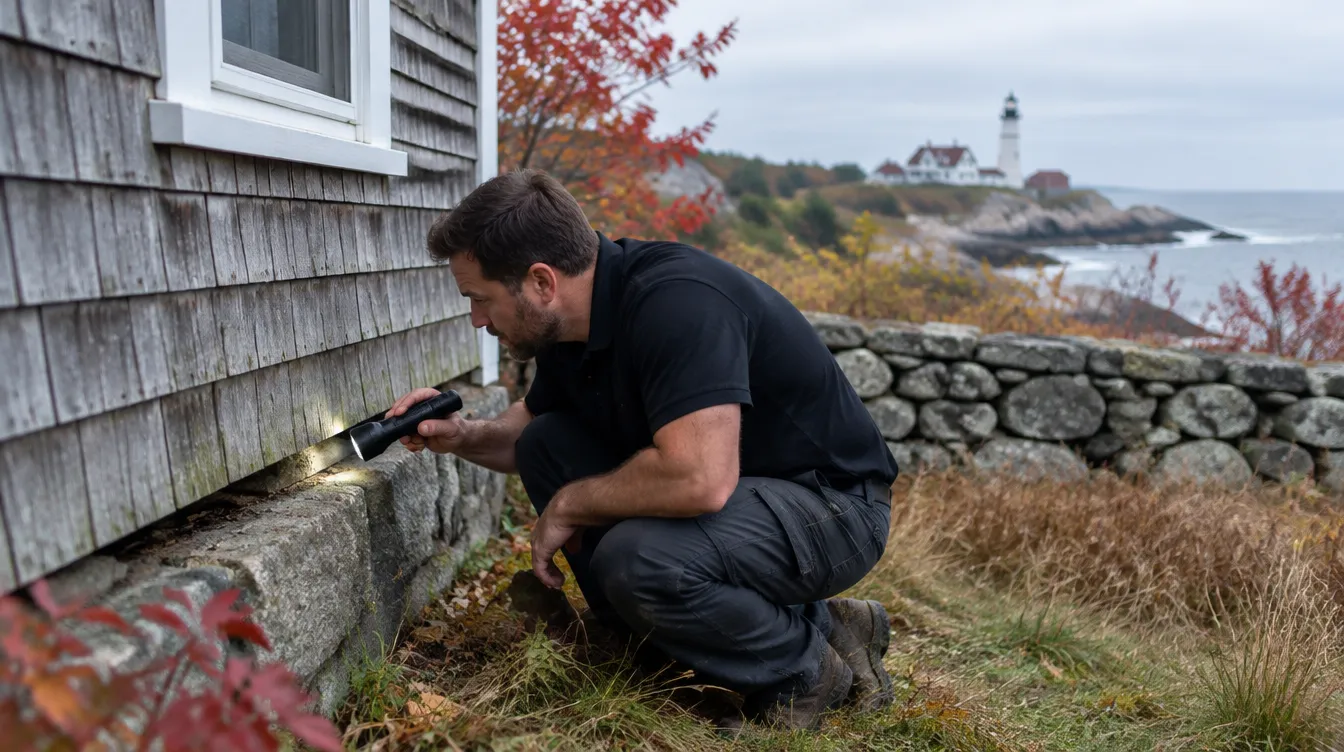
Cape Elizabeth gets fall a little differently from the rest of Greater Portland. The wind off the water strips the trees early, the summer places along Shore Road and around Two Lights go quiet, and the same breeze that keeps the mosquitoes down in August pushes every mouse, cluster fly and deer tick in town toward the one thing it wants in October: shelter.
If you have searched for pest control in Cape Elizabeth this month, you are most likely dealing with one of five things. This guide goes through each of them, what you can reasonably do yourself, and where a professional visit earns its keep.
Why Cape Elizabeth homes see so much fall pest pressure
It comes down to the land and the houses on it. Cape Elizabeth is mostly edge habitat: woods and fields meeting marsh, ledge and shoreline. The Spurwink marsh, the greenbelt trails, Robinson Woods, the working farmland along Route 77 and the thickets behind Crescent Beach and Kettle Cove hold a lot of mice, voles and deer, and deer carry the ticks. A house on a wooded lot off Ocean House Road or a cottage near Pond Cove sits a few yards from all of it.
The houses help too. The town has a mix of 19th-century farmhouses and capes on stone foundations, shingle-style summer houses that were winterized decades ago, and newer homes on ledge where the foundation meets rock unevenly. Cedar shingles stay damp in salt air, soffits take a beating from onshore wind, and bulkheads, porches and additions leave gaps at the sill. None of that means your house has a problem. It means October is the month to look.
1. Mice moving in from the fields and stone walls
This is the call we get most from Cape Elizabeth once the nights drop into the 40s. White-footed mice live in the stone walls, hedgerows and field edges all summer and follow warm air leaking out of a house in fall. A mouse needs a gap about the width of a pencil.
Signs to check for:
- Droppings along the sill plate in the basement, in the drawer under the oven, or under the kitchen sink
- Scratching in a wall or ceiling shortly after dark
- Shredded insulation, boat cushions or stored fabric in the garage, barn or attic
- Chewed corners on birdseed, pet food or grass seed bags
Trapping handles the mice that are already inside. Sealing the entry points is what stops the next ones, and on a house with a fieldstone foundation that sealing is most of the job. Our fall rodent exclusion guide walks through where mice get in and what sealing involves, and our rodent control page covers how we handle it.
2. Rats near coops, compost and the shore
Cape Elizabeth has more backyard chickens, compost piles and small farm operations than most of its neighbors, and Norway rats notice. Unlike mice, rats usually live outside in burrows and come to a building for food and cover: spilled feed, an open compost bin, a woodpile against the barn, or a stone wall next to the house. Properties near the water also see rats working the shoreline and marsh edge.
If you are seeing burrow holes with smooth, packed entrances near a coop or foundation, greasy rub marks along a wall, or droppings the size of an olive pit, treat it as a rat problem rather than a mouse problem. The approach is different: secure the feed and compost first, then trap and seal. Our Norway rat control page explains the difference.
3. Adult deer ticks on the trails, the greenbelt and your own lawn edge
Deer are a familiar sight in Cape Elizabeth, and where deer go, adult deer ticks follow. October and November are the second peak for adult blacklegged ticks, and they stay active on any day above freezing. The risk is not just on the greenbelt or at Fort Williams. It is the leaf litter at the edge of your own lawn, the stone wall, the perennial bed the dog pushes through, and the woodpile.
What helps in fall:
- Keep the lawn mowed to the edge and rake leaves out of the transition zone between lawn and woods
- Walk the dog on the middle of trails rather than brushing the edges, and check pets and kids after any time outside
- Store firewood off the ground and away from the house
- Consider a fall perimeter tick treatment of the yard edge, which targets the adults before they overwinter and lay eggs in spring
Our fall deer tick guide covers the season in detail, and our flea and tick treatment page covers yard treatments.
4. Cluster flies, lady beetles and seed bugs in shingled walls
If large, slow flies are gathering on a south-facing wall or a sunny window on a warm afternoon, they are cluster flies, not house flies, and they are not a sanitation problem. They develop outdoors as parasites of earthworms, which Cape Elizabeth's fields and lawns have plenty of, and in fall the adults collect on sun-warmed shingles and work their way under them, into soffits and up into attics to wait out the winter. Multicolored Asian lady beetles and western conifer seed bugs do the same thing, and light-colored shingled houses facing the sun get the most of all three.
Two things are worth knowing. First, timing matters: an exterior treatment and sealing done in late September and October, before the insects settle in, is far more effective than anything done in January. Second, once they are inside a wall, do not spray into the void. Vacuum the ones that appear indoors and plan to seal the entry points before next fall.
5. Carpenter ants in damp shingles and sills
Salt air and fog keep cedar shingles, trim and sills damp on the water side of a house, and damp wood is exactly what carpenter ants want. In Maine they, not termites, are the structural pest that matters. A few ants walking out of a log by the woodstove are usually just that log. Large black ants appearing indoors in late fall or winter with no firewood nearby can mean a nest in the structure, often behind a leaking window, a porch roof or a bathroom wall, and that is worth an inspection. See our carpenter ant control page for what that involves.
A special note on seasonal and second homes
Cape Elizabeth has a lot of houses that are closed up from Columbus Day to Memorial Day. An unheated, unoccupied house is the easiest target in town: no one hears the scratching, the mouse population grows all winter, and the first sign is the smell or the chewed wiring in May. If you are closing a place for the season, do the walk-around below before you lock up, empty every bit of food including the pantry and bird seed, set traps in the basement and garage, and arrange for someone to check the house once a month. A pre-closing inspection is a reasonable thing to ask a pest control company for.
A one-hour October walk-around
You can catch most of this with a flashlight and a slow lap around the house:
- Check where the siding or shingles meet the foundation. Any gap you can fit a pencil into is a mouse door.
- Look at the bulkhead, the garage door seal and any porch or deck skirting for daylight.
- Check where the oil fill, gas line, cable, water and AC lines come through. These are often sealed with nothing but old foam.
- Look up at gable, soffit and ridge vents for missing or torn screening, and at the bottom course of shingles for lifted edges.
- Move firewood, kayaks, lobster traps, leaf piles and stored items away from the foundation.
- Secure chicken feed and compost in metal or heavy, lidded containers.
- Cut back branches touching the roof and rake the leaf litter out of the lawn edge.
Seal small gaps with copper mesh and exterior sealant rather than spray foam alone, since mice chew straight through foam.
When to call for pest control in Cape Elizabeth
DIY is reasonable for a single mouse or a few flies on a window. It is time to call when:
- You are still catching mice after two weeks of trapping
- You hear activity in walls or ceilings, or find droppings in more than one room
- You see rat burrows, rub marks or large droppings near a coop, compost or the foundation
- Cluster flies or lady beetles return to the same rooms every fall
- You see large black ants indoors after the first frost
- You are closing a seasonal home and want it checked before winter
A professional visit starts with an inspection of the whole exterior and the basement or crawl space, identifies what is actually present, and ends with a written plan. Robbins Pest Services is based in downtown Portland, about fifteen minutes from Cape Elizabeth, and provides pest control in Cape Elizabeth for year-round homes, seasonal houses and small farms, as well as neighboring South Portland and Scarborough. The inspection is free and you get a firm quote before any work starts. You can request a free inspection online or call (207) 770-0274.
Frequently asked questions
When do mice start coming into Cape Elizabeth homes?
Activity picks up with the first cold nights in late September and runs through November. Houses on wooded or field-edge lots, and seasonal houses that have been closed up, see it earliest. Sealing entry points before or during that window is the most effective prevention.
Are deer ticks still a risk in Cape Elizabeth in October and November?
Yes. Adult blacklegged (deer) ticks have a second peak in fall and stay active on any day above freezing, including on the greenbelt trails, at the parks and in the leaf litter at the edge of your own yard. Keep checking pets and people after time outside until there is snow on the ground.
Why do I have rats and my neighbor has mice?
Rats go where the food is. Chicken feed, open compost, bird feeders and fallen fruit draw Norway rats to a property, and they burrow outside before they ever try to get in. Mice are after warmth and shelter and will enter any house with a gap. The approach to each is different, which is why we identify the animal before treating.
Should I spray cluster flies or lady beetles inside the house?
No. Indoor sprays do little against insects hiding in wall voids and attics and can leave dead insects that attract other pests. Vacuum the ones you see and focus on sealing the outside of the house, ideally in early fall before they arrive.
Can you inspect a seasonal home before we close it for the winter?
Yes. We inspect the exterior and basement, seal what we find, set monitoring in the basement and garage, and give you a short list of what to do before you lock up. Arranging a mid-winter check is a good idea for any house that sits empty.
How much does pest control cost in Cape Elizabeth, Maine?
It depends on the pest, the size and age of the house, and how much sealing work is needed. We inspect first and give a firm quote before any work begins.